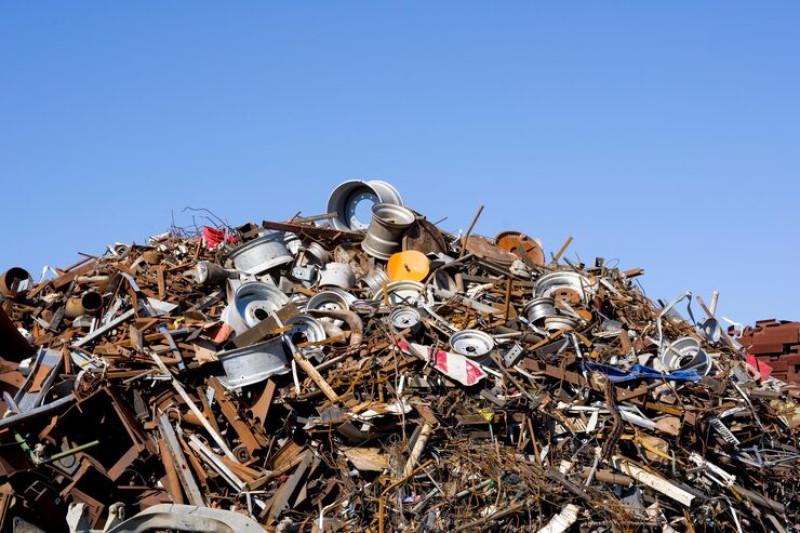
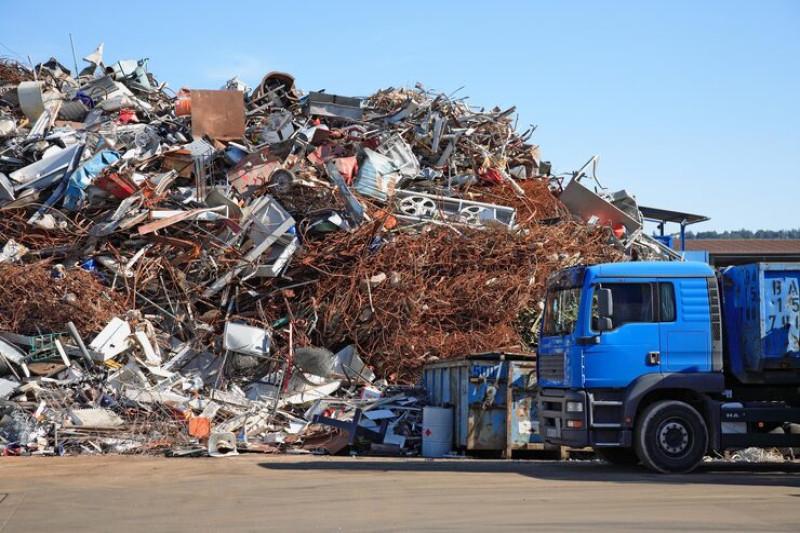
Scrap metal recycling refers to the recovery and processing of recyclable metal materials from end-of-life products and structures so they can be reintroduced as raw material for the production of new goods.
Types of Recyclable Metals
Scrap metal is categorized into two types: ferrous and non-ferrous. Here’s the difference between the two:
FERROUS METALS
The term “ferrous” is derived from the Latin word for iron and refers to both iron and steel. Iron is the second most commonly occurring metal in our planet’s crust. Its natural magnetism is what gives the Earth a magnetic field. Because nearly all ferrous metals are magnetic, metal scrap yards often use massive electromagnets mounted on excavators to load and unload ferrous scrap from trucks and move it around the yard.
The largest sources of scrap ferrous metals in the U.S. are found in durable products such as appliances, tires, and furniture. According to the Environmental Protection Agency, 27.8% of all recycled ferrous metals in 2018 came from these durable goods, which equals a whopping 4.7 million tons.
The following items are also made of ferrous metals:
Construction and building materials such as I beams, ductwork, rebar, and electrical wiring
Transportation parts and products such as cars, railroad scrap, rotors, drums, and motor blocks
Containers and packaging
Scrap metal is also a byproduct of steel manufacturing. This type of scrap — including clippings, busheling, and skeletons — is easy and valuable to recycle back into the same stream it came from, because it isn’t altered and therefore doesn’t require as much processing.
Non-FERROUS METALS
Because non-ferrous metals don’t lose their chemical properties during the recycling process, they can be endlessly recycled. There’s a long list of non-ferrous metals, but some of the most common base metals include aluminum, copper, nickel, lead, tin, and zinc. Precious metals like gold and silver also belong to the non-ferrous category. Each of these has a wide variety of uses.
Although non-ferrous scrap makes up only 10% of the total material recycled in the U.S., it provides half the total value of the scrap recycling industry’s earnings. For example, the U.S. exported $10.4 billion worth of non-ferrous scrap metal to more than 95 countries in 2018 alone.
Because recycling operations purchase non-ferrous scrap on a per-pound basis, it’s usually more valuable to recyclers. However, prices for non-ferrous tend to fluctuate more than for ferrous metals.
Non-Recyclable Metals
Unfortunately, not all scrap metal can be recycled, but the list of non-recyclable metals is exceptionally short. It includes radioactive metals like uranium and plutonium as well as toxic metals like mercury. However, there are some metals or metal items that scrap yards will not take, often for liability reasons. Other items they may charge to take because it takes extra steps to process them. It’s wise to check with a yard before you bring something in if you’re not sure.